







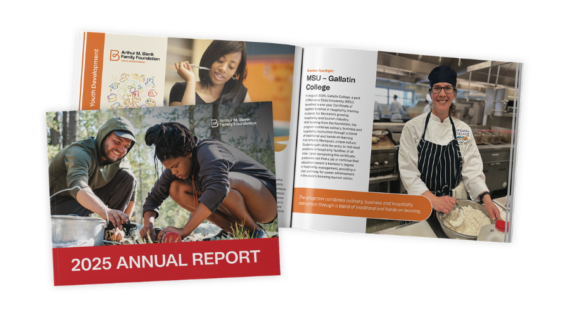
Now Available: Blank Foundation’s 2025 Annual Report
The Arthur M. Blank Family Foundation’s 2025 Annual Report is here, highlighting a year of...
Across the United States, civic participation is in decline. In rural communities, young people often find themselves living in “civic deserts” where there are few perceived ways to engage in community life or influence change. The Trust for Civic Life seeks to change that.
The Trust for Civic Life (the Trust) invests in locally led civic efforts to build deeper connections, increase trust and reimagine civic life. The Trust works in regions that are full of opportunities for impact, but are often overlooked by national philanthropy. These focus areas include the Black Belt, Central Appalachia, Tribal Lands, the Southwest border and other rural communities undergoing major transitions.
As part of a two-year Civic Education and Engagement learning portfolio, the Foundation is supporting the Trust’s grantmaking to empower the next generation as civic leaders in their local communities and our nation. By expanding real-world opportunities that increase civic engagement among young people, the small grants are designed to fuel civic learning for action, challenging young people to work with partners to solve issues in their communities. The grants span a wide range of activities but are all designed to build civic skills in young people.
Doing this work in a breadth of places underscores a lesson that the Foundation team has seen across this work: many young people are skeptical of anything labeled “civic engagement,” but they are eager to participate in programs to help their community.
“The programs that most effectively build civic skills don’t necessarily look like democracy programs,” said Vanessa Tucker, senior program officer in the Democracy Program. “What matters is giving young people opportunities to practice listening, working with others and solving problems in settings that already feel meaningful to them.”
The Trust’s 2026 Young People Civic Experiment portfolio, announced this month, provides funding for 15 grantee partners to support 45 youth projects and small grant campaigns aimed at engaging young people in rural areas. One of those will include the Huntington Civic Action Group in Huntington, West Virginia. The organization’s youth-led Democracy Task Group will engage residents to identify transportation and infrastructure barriers facing low-income and disabled residents. The project will create a publicly available resource that empowers community members—particularly young people, students and historically underrepresented residents—to advocate with local, county, state and university leaders for more accessible and equitable community planning.
“A strong civic future depends on young people taking part in it, and we want to understand how best to support them and meet them where they’re at,” said Charlie Brown, executive director, Trust for Civic Life. “These Civic Experiments are a chance to see what’s working to get young people involved in rural communities, and what matters most to them. We’re excited to learn all we can from these locally led projects.”
The recently awarded Young People Civic Experiment grants will build on work that is already underway by Trust for Civic Life grantees across the country. One of those is the Foundation for Appalachian Ohio’s (FAO) Growing Home Fellowship program, which gives young community builders a stake in the future of the region.
The fellowship was created to encourage young adults to stay in Appalachian Ohio, put down roots and become civic leaders in their communities. Fellows commit to living, working and leading in an Appalachian Ohio county for five years and in return, they receive an annual stipend and access to a network of other emerging leaders.
“Our theory is that if we engage these Fellows and get a commitment from them for five years, during which time they become seen as emerging leaders in the community, then they have a stake in that community and a reason to stay,” said Guy Land, leadership coach at the Foundation for Appalachian Ohio.
FAO supports more than 100 emerging leaders across 29 counties both financially and through a targeted program that teaches them how to identify community needs, develop solutions and assemble a network of partners to address local challenges.
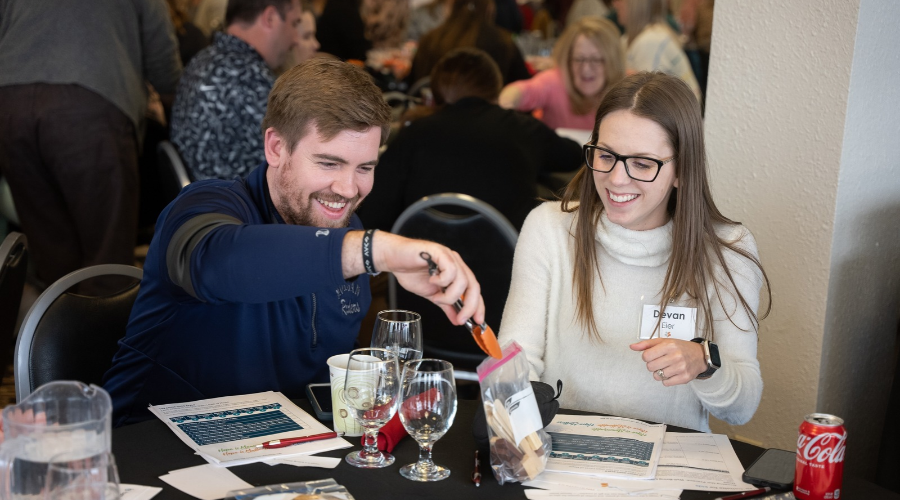
One of the Fellows is Devan Eier, a Morgan County community leader and educator who grew up in the area, left for college and returned home to teach agriculture at her former high school. Eier’s role as a Fellow has given her additional connections, resources and confidence to become more deeply involved in her community.
“It was a no-brainer for me to apply to the Fellowship program,” Eier said. “And since I’ve been in the program, I’ve never felt like I was alone. All the connections that I’ve made have really helped me make an impact in the community.”
Along with joining the committee guiding the Morgan Community Fund, Eier led a Fill the Freezer program that allows buyers at the county fair to donate livestock rather than keep or sell the animals. The donated hogs are processed locally, and the meat is given to the county food pantry.
The program has become about much more than food. Students who raise the livestock can participate in delivering the meat to the pantry, allowing them to see firsthand how something they worked on can benefit their neighbors.
“We’re taking on tremendous social challenges like poverty and food insecurity,” said Cara Dingus Brook, president and CEO, Foundation for Appalachian Ohio. “The leadership that Devan and other Fellows have shown has created a sustained way for the community to work together to organize existing resources.”
Like FAO, all Trust for Civic Life grantee partners are cultivating a sense of connection that is part of a larger effort to strengthen civic life in rural communities across the United States. This civic movement is creating the conditions for young people to see a future for themselves in the communities they love and call home, all while developing the skills to be a highly engaged participant in our democracy.
In 2025, the Arthur M. Blank Family Foundation launched a two-year learning portfolio focused on increasing civic education and engagement for young people. The portfolio’s nine nonprofits span diverse geographies and strategies — from startups to century-old institutions. Through site visits, data collection and convenings, the foundation will discover what approaches work best, positioning a potential future funding strategy designed to encourage young people to become highly engaged citizens.

Stay up to date with stories of impact, grants in your neighborhood and other interesting foundation news.