









Now Available: Blank Foundation’s 2025 Annual Report
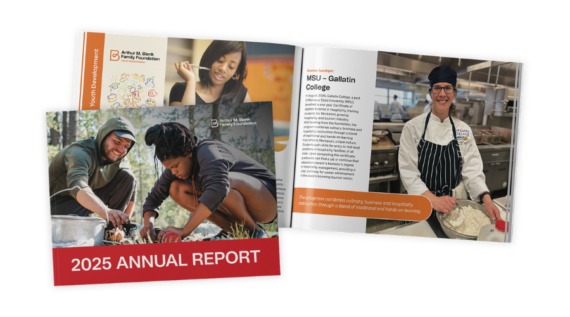
The Arthur M. Blank Family Foundation’s 2025 Annual Report is here, highlighting a year of...
Imagine what it’s like to be a 48-year-old mother of four emerging from prison after serving seven years on two separate drug convictions. Your family is not there to pick you up. You’re completely on your own.
To meet your most basic Maslovian needs, you have nothing but a $25 debit card that a prison official handed you upon your release. Actually, it’s worse than that. Because you were convicted in Georgia, you are responsible for paying the state parole fees. Your probation officer told you that if you don’t pay your $5,000 fee within three years, you will get sent back to prison.
You take a bus to Atlanta. You immediately start looking for work—any work. You figure the most likely place to start is cleaning other people’s homes. You interview with Merry Maids. You feel like you nailed the interview and get your hopes up, but the company turns you down. The recruiter tells you that your felony record means their insurance won’t cover you.
You’ve seen all the homeless people in Atlanta; you simply don’t know how you’re going to avoid their fate. If you can’t even support yourself, how are you possibly going to regain custody of your teenage daughter? You’re strong, but you can’t help but sob.
Hill’s Climb
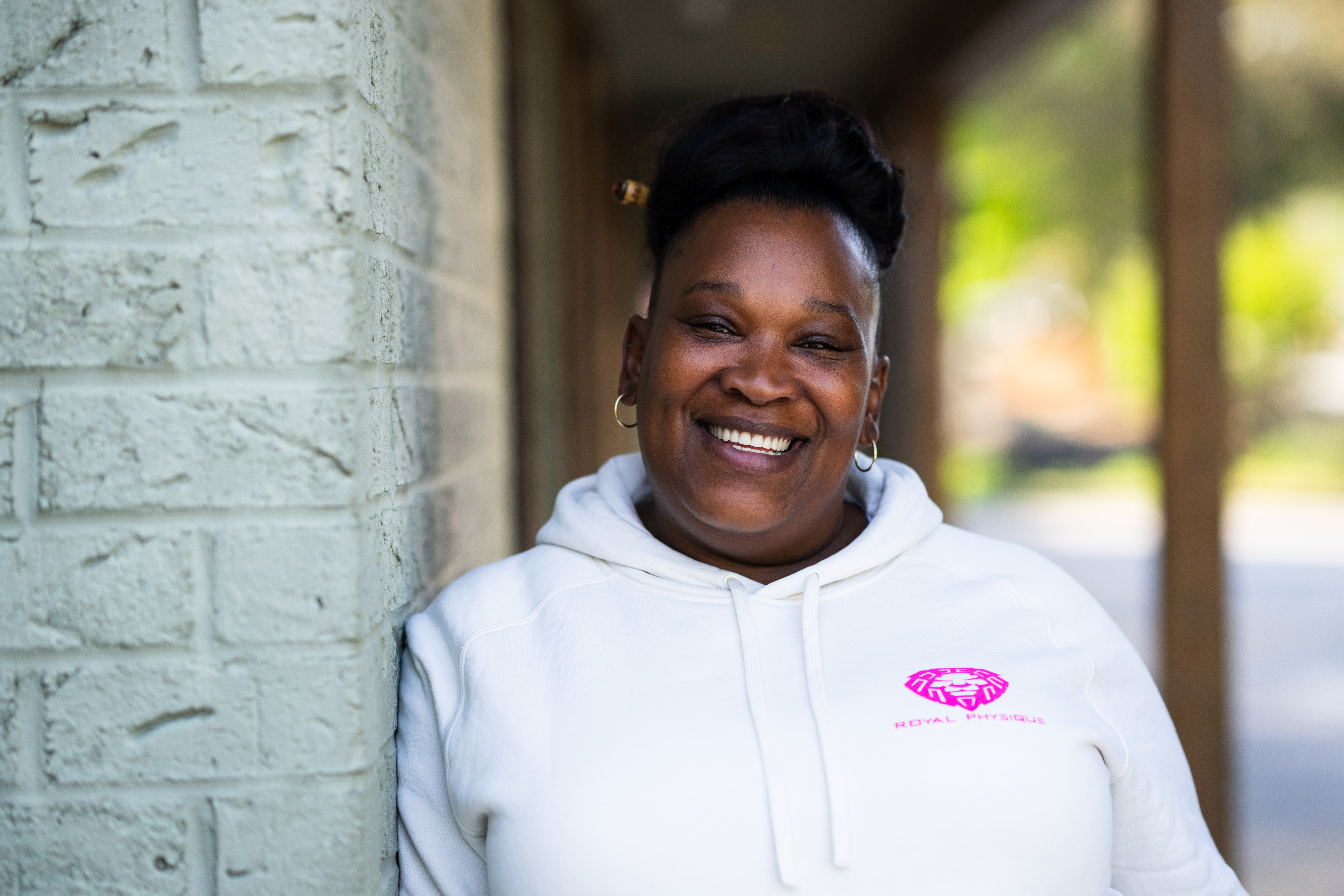
Not one word above is fiction. It’s the true story of Sabrina Hill, who insisted we use her real name. “Part of my process these days is sharing with others what I’ve been through,” she explained.
When we met Sabrina for breakfast at Rosie’s Diner in April, she was 17 months post release. Over pancakes, bacon, and grits—and, at times, more tears—Sabrina helped us understand how she climbed out of despair and then reunited with her daughter, found a job she loves, and began to heal. The key: allowing caring individuals to surround her with a village of support.
From Trauma to Trust
Hill’s post-incarceration journey began at the Metro Transitional Center (TC), a halfway house in a residential area of Atlanta. The facility itself was only a small step up from state prison, but it was quiet and safe. “I had to learn how to forgive myself for all the hurt I caused my family,” Hill shared with a jump-right-in candor we did not expect but warmly welcomed. “That process began at TC.”
With the help of a program she participated in at TC, Hill found the City of Refuge, a faith-based organization in the historic Vine City neighborhood of Westside Atlanta. Hill moved into the City of Refuge’s Welcome Home House, a four-bedroom residence that offered more privacy, a loving church community, and a skillful social worker named Sarah. “Sarah said to me, ‘You have to want to change,” Hill shared. “And if you do want to change, I promise I can help.”
Hill accepted the help, and then the two started working together to unpack decades of trauma. Molestation as a child. Abandonment by her father. Overt, old-school racism. Betrayal by the man who recruited her into selling meth. Worst of all, the knowledge that her teenage daughter was groomed and raped by her own father when Hill was in prison.
Even more important to Hill, a City of Refuge case manager told Hill she would help her regain custody of that teenage daughter. “No one believed it was possible, but we fought hard for months, and we did it,” Hill shared. “She’s 18 now, and she needs me.”
From Trust to Stability
After Hill found City of Refuge, a friend told her about a nonprofit called the Center for Employment Opportunities (CEO). “It took about a week or two to get an appointment, but I’m so thankful I found them,” she told us. “When I came in to CEO that first day, the very kind program manager [Antwahn Mangum] said, ‘I can see it in your face—you’re stressed. What’s going on?’ I found out that he really cared. He treated me not like a felon but like family.”
CEO is one of the country’s most respected and innovative nonprofits. It got its start as an independent organization three decades ago in New York City and quickly set itself apart from other nonprofits by using rigorous research methods to fuel learning and improvement. Today, the organization serves almost 8,000 formerly incarcerated men and women every year, across 14 states. It has established the best track record of success in reducing recidivism of any organization in America.
CEO launched its newest base of operations, in Atlanta, in 2021. That launch was made possible by GreenLight Fund, a national network backed by hedge fund titans and focused on scaling highly effective nonprofits. Based on CEO’s first four years of successful operations in Atlanta, the Arthur M. Blank Foundation provided CEO a grant of $1.5 million in 2025 so it could expand to Atlanta’s Westside.
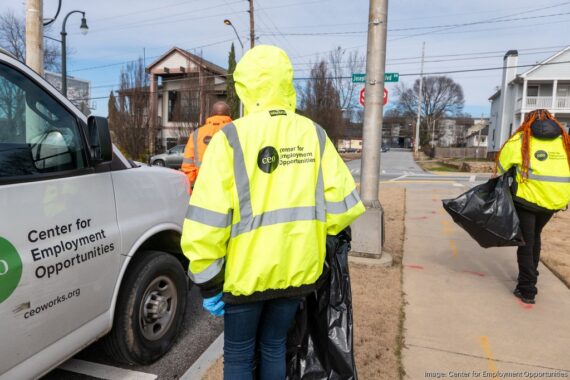
The timing of that expansion was a godsend for Hill. It allowed her to connect with skilled, caring employees—not just Antwahn Mangum but also Kimeisha Owens and Brad Lee Jr. And it allowed her to start work almost immediately on a clean-up crew with the Atlanta Department of Parks and Recreation. “You work about 6-8 hours a day and make about $80, but that money helped a lot—for clothing, food, and hygiene,” Hill said.
Even as Hill was working on the parks crew three days a week, CEO was helping her explore other jobs. “The whole point of CEO is to find permanent work,” she said. After three months, CEO helped Hill find and land a job with a mom-and-pop courier service. She drives a courier van all around the Atlanta metro region making deliveries of automotive parts and building materials. “I love my job,” Hill shared. “Driving is my thing. I love being on the open road. From being incarcerated, it just helps if I spend time by myself, away from other people, and meditate. It helps me clear my head.”
The job pays on commission, which generally adds up to only about $100 a day. And, unfortunately, it doesn’t provide benefits. But Hill is getting more than money out of the work. “My boss is great. She calls me her business partner. She’s teaching me the business. She wants me to get my commercial driver’s license, get my own van, and start my own business. Who doesn’t want to be their own boss?”
Meanwhile, CEO is also working with Hill on stabilizing the rest of her life. “Antwahn, Kimeisha, and Brad have faith in me. They’re my biggest supporters.”
From Stability to Self-Sufficiency
With ongoing support from City of Refuge, CEO, and her church, Hill is continuing her process of building her work skills, keeping her youngest child safe, reconnecting with rest of her family, banishing her lingering guilt, and building true self-sufficiency. Hill said she speaks with God every morning and every night. Some days, she thanks God for all the good fortune in her life. Other days, she acknowledges that she still has scars from the fires she has walked through in her life.
“I could write a book about all that I’ve experienced,” she said as we prepared to say goodbye. “But I’m not ready to write my story yet. I still have so much I want to prove to myself and to my children. Thank God I have so many people in my corner helping me stay strong and be the author of that story.”

Stay up to date with stories of impact, grants in your neighborhood and other interesting foundation news.