No institutions in America have done more to weave together the power of community organizing and the power of faith than the Black churches of Atlanta. When Martin Luther King, Jr. ascended to the pulpit of Ebenezer Baptist Church, he was not inventing a new model, he was inheriting a rich tradition. That tradition was deep-rooted and battle tested. It had been quietly holding Atlanta together for generations.
You can see the same organizing power at work today at southwest Atlanta’s Vicars Community Center, run by the Community Church Atlanta. Vicars, which stands for “volunteer in community and related services,” has for decades been a trusted refuge for residents every time a challenge hits—from COVID to food insecurity. Over the past year, Vicars has also become a model of how a community can prepare itself for climate disasters.
Resilience Through Clean Energy
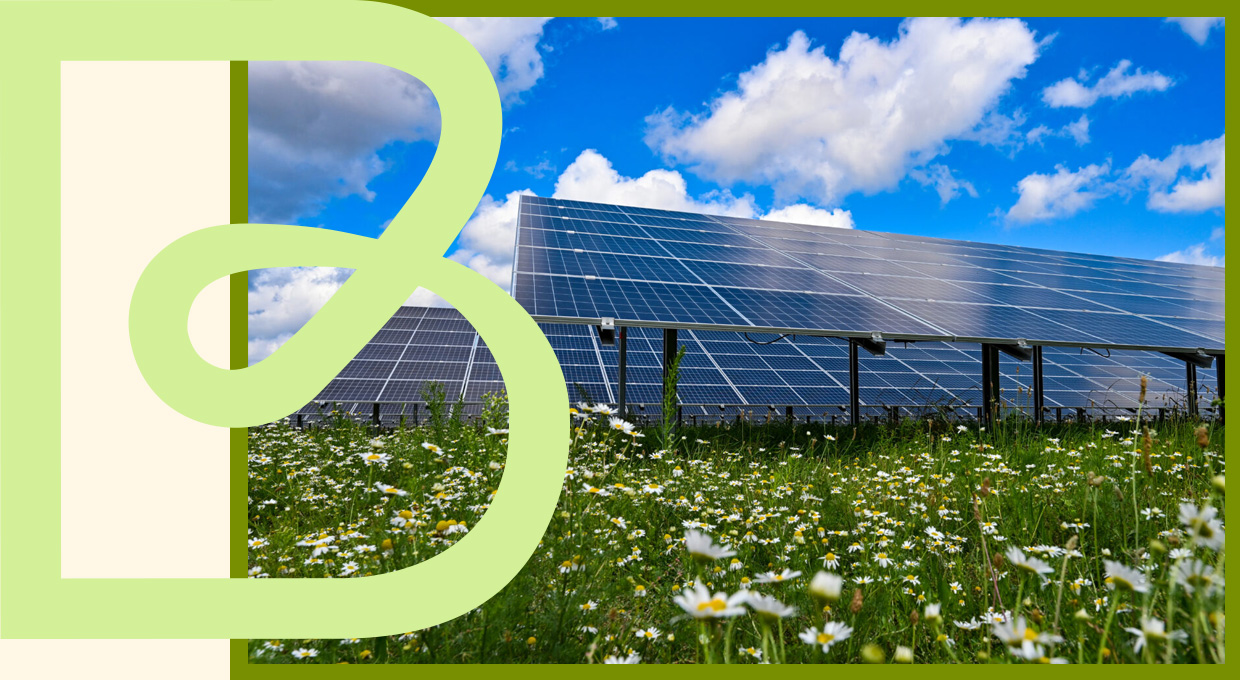
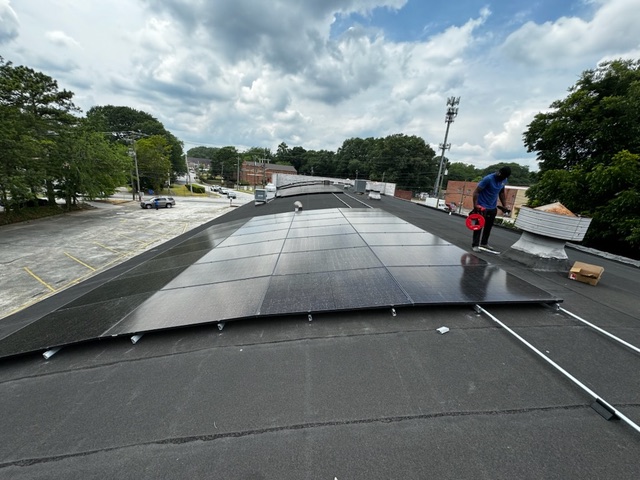
Braiding together technical support from the national nonprofit Groundswell, philanthropic funding and Biden-era tax credits, Vicars created one of the country’s first community-owned resilience hubs. Vicars’s roof is now covered in solar panels, and those panels are connected to a large battery. Between the panels and the storage system, Vicars will be able to provide safe shelter and emergency power for weeks on end. “These are neighborhoods where folks can’t always just hop in a car and get to a cooling center or shelter,” Pastor Dr. Kevin W. Earley shared with Georgia Conservation Voters. “What happens if you rely on refrigerated medication like insulin … and the power goes out?”
Southwest Atlanta has not experienced a major power outage since Vicars’ system went online. However, the system is already paying dividends for the church, lowering energy costs by approximately $6,000 a year. Because the system’s total cost of $445,000 was fully funded by public and private partners, the church can pour every dollar of those savings back into its mission and ministry. “It’s enriching the congregation, helping to reduce pollution…and supporting not just congregants but other legacy residents and seniors,” said Atlanta Chief Sustainability Officer Chandra Farley.
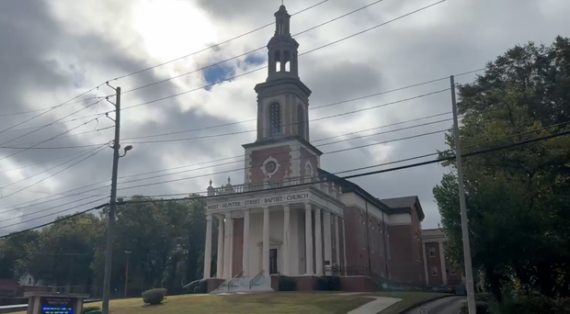
The Vicars project was so successful that it catalyzed the development of a broader Westside Resilience Corridor, a partnership among Groundswell and four anchor institutions in southwest Atlanta: Community Church Atlanta, West Hunter Street Baptist Church, Providence Missionary Baptist Church and Atlanta Good Shepherd Community Church. Building on the Vicars model, Groundswell will be able to start construction of a Vicars-like solar system at West Hunter this year. Groundswell is now in the early design phase with the leaders and congregants of Providence and Good Shepherd.
Resilience Through Lowering Homeowners’ Bills
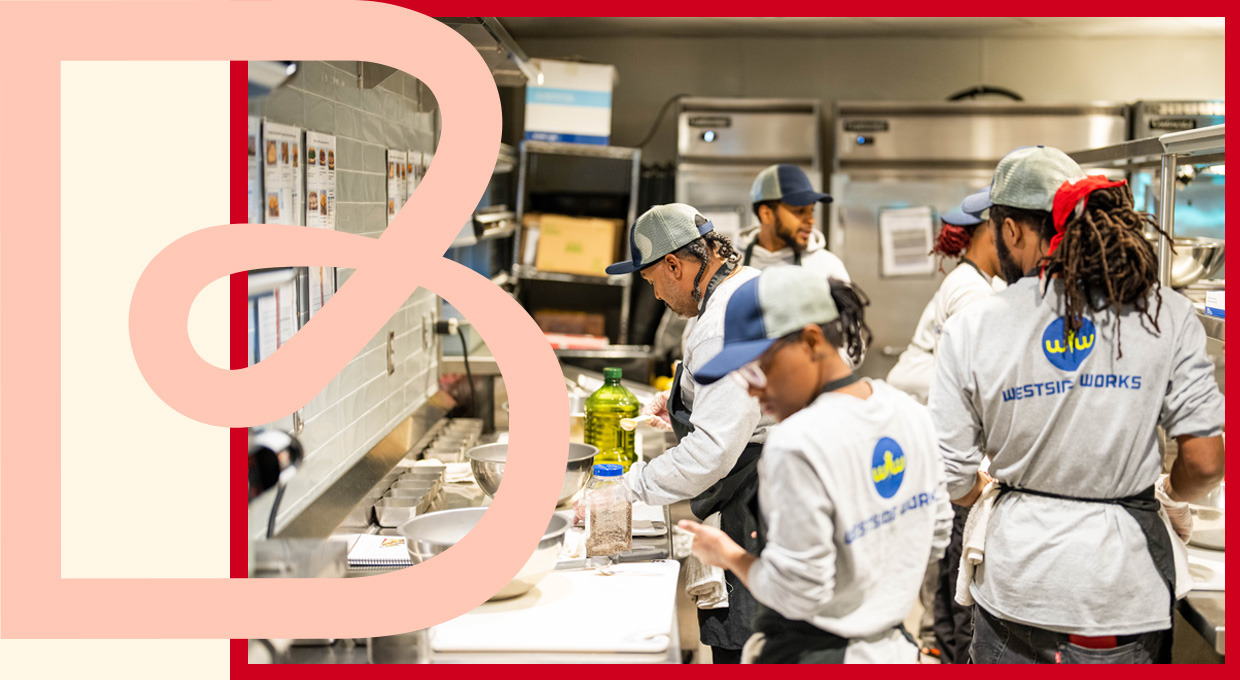
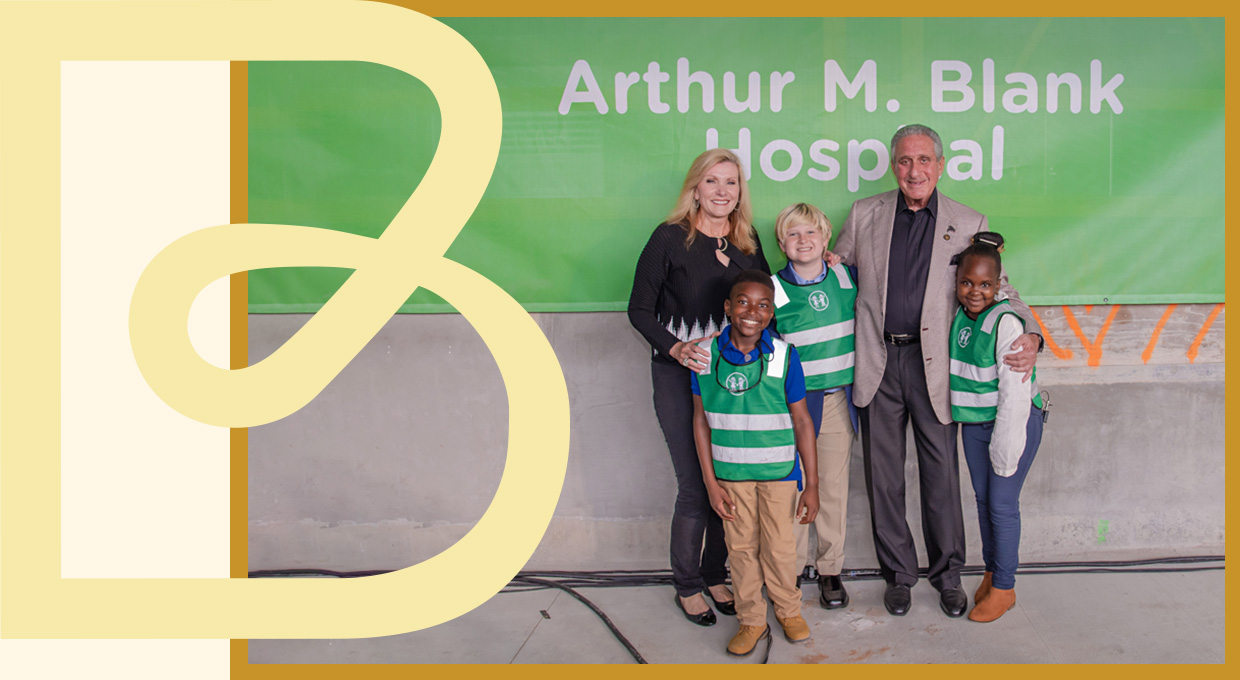
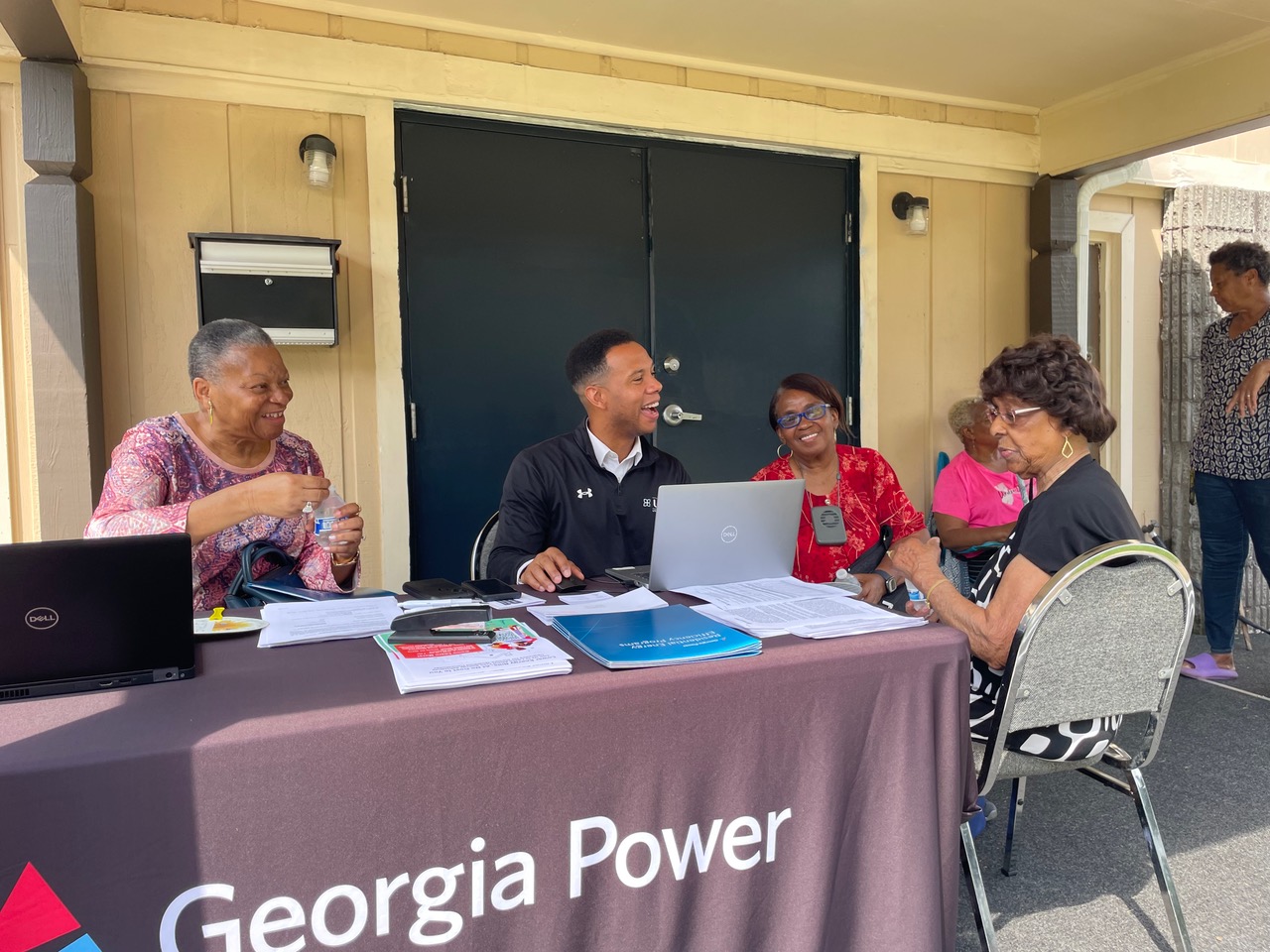
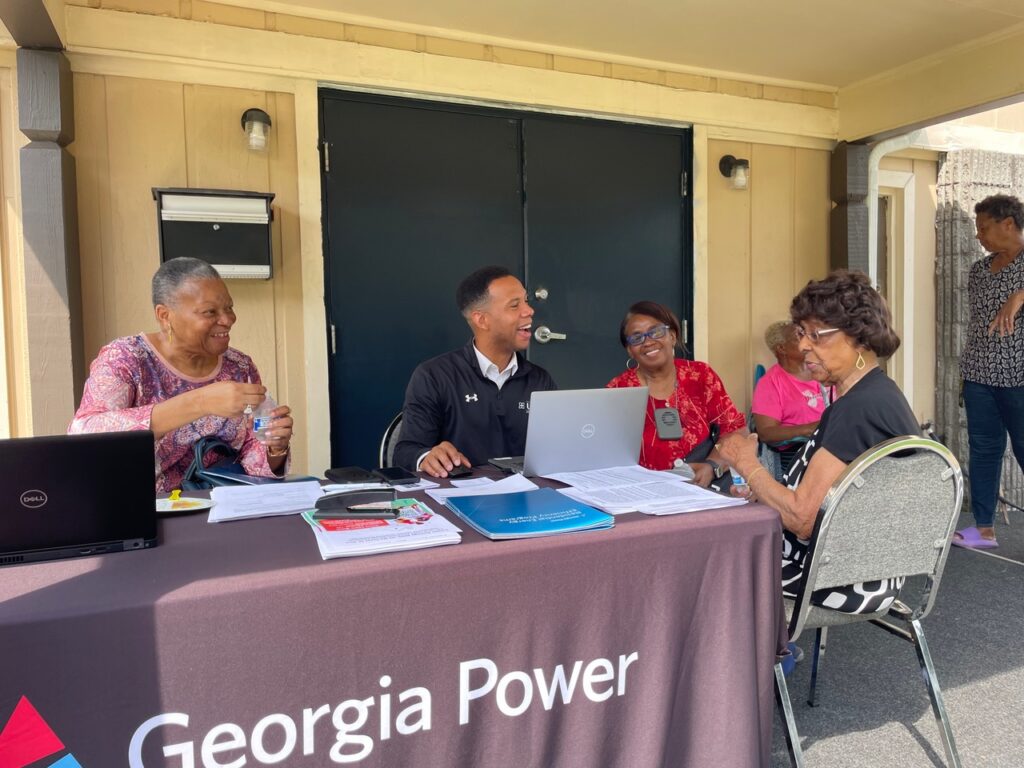
The goal of the Westside Resilience Corridor is not just to create hubs that support the community during emergencies. Another core goal is to help legacy residents stay in their homes and reduce their disproportionately high energy bills. Through all four of the churches and a team of local “community navigators,” Groundswell has been enrolling community members in a program that provides health-and-safety repairs and efficiency upgrades to their aging homes. Homeowners pay nothing, thanks to philanthropic support (including a grant from the Arthur M. Blank Family Foundation) as well as utility and government energy-efficiency funding.
Groundswell will complete the work on the first 50 homes by the end of this month. Most of the homes were built in the 1940s, and many are in dire need of major pre-weatherization repairs, such as new roofs, mold remediation and asbestos removal. These types of enabling repairs make homes eligible for energy-efficiency upgrades.
The typical program participant is a retired grandmother, a legacy resident who owns her own home but hasn’t had the money to invest in repairs or efficiency. “We’ve been really saddened by what we find in some of the homes,” said Groundswell CEO Michelle Moore, a native of rural LaGrange, Georgia. “People who have worked their whole lives deserve to live in dignity. But a quarter of the homes needed about $20,000 in roof and wood-rot repairs before it was even safe to do any of the other upgrades.”
As a result of Westside Resilience Corridor repairs and efficiency improvements, residents could save as much as 30% on their energy bills. In the peak months of summer and winter, that amounts to hundreds of dollars of savings per month.
Resilience Through High-Wage Jobs
Now the Westside Resilience Corridor’s partners are moving into their next collaboration: helping residents train for and secure good energy jobs. “We’re talking about jobs such as a line worker for a local utility,” said Moore. “That kind of job pays upwards of $90,000 a year.”
On March 2, the Westside Resilience Corridor launched the first session of a 10-week career pre-employment training series at Vicars. According to Groundswell Senior VP Matthew Wesley Williams, “Nearly 100 local residents—many young, underemployed or unemployed—applied to participate in the inaugural cohort, for which we had only 20 available slots. The need and demand could not be clearer.”
Principled Unity
Only a year into the partnership, the Westside Resilience Corridor is producing wins at every level. Job seekers are on the road to high-quality careers. Homeowners are living with more dignity and paying less for energy. Churches are saving money, providing their neighbors with emergency services while cutting greenhouse-gas pollution. Utilities are doing a better job of managing strain on the grid. And elected officials are meeting constituents’ needs in highly tangible ways.
“Clean-energy groups, state agencies, foundations, homeowners, churches and utilities rarely sit around the table together,” said Moore. “I’ve been at this work for 35 years. This is the first time I’ve seen this level of principled unity.”
Stay up to date with stories of impact, grants in your neighborhood and other interesting foundation news.
By submitting this form, you are consenting to receive marketing emails from: Arthur M. Blank Family Foundation. You can revoke your consent to receive emails at any time by using the SafeUnsubscribe® link, found at the bottom of every email. Emails are serviced by Constant Contact