






Now Available: Blank Foundation’s 2025 Annual Report
The Arthur M. Blank Family Foundation’s 2025 Annual Report is here, highlighting a year of...
Low-income families make up 27% of U.S. households and often help fund energy efficiency programs through fees on their monthly utility bills. Yet they receive just 13% of the assistance those programs provide. That gap, identified through an analysis by the Southeast Energy Efficiency Alliance (SEEA), is what the Atlanta-based organization set out to close.
Since its founding in 2007, SEEA has promoted energy efficiency as a catalyst for economic growth, workforce development and energy security across 12 southeastern states. The organization provides research, consultation, education, program management and financial services to stakeholders across the energy sector.
In 2025, SEEA launched the Southeast Equitable Energy through Community-Driven Solutions program, or SEEDS, to boost enrollment in utility energy efficiency programs for low-income households across the region. SEEDS addresses the barriers that prevent residents from signing up for programs that would lower their energy bills and reduce their energy consumption. These barriers include low awareness, complex application processes and distrust of utilities and state and federal agencies.
“It can be a real challenge for people to not only know what energy assistance programs are available to them, but also how to properly apply,” said William D. Bryan, director of research for the Southeast Energy Efficiency Alliance. “In collaboration with trusted local partners, the SEEDS program provides hands-on case management that helps low-income residents overcome the barriers and ease the complexities of enrolling in energy efficiency programs.”
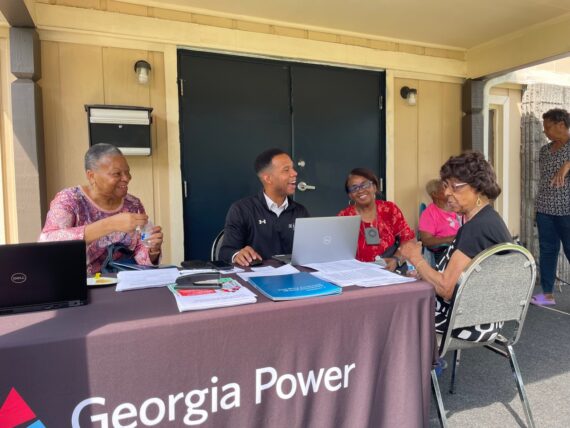
During a pilot in Savannah and Athens, Georgia, SEEA tripled resident participation in existing utility assistance programs. Following that success, SEEA expanded SEEDS, connecting residents in eight southeastern cities in Alabama, Florida, Georgia, North Carolina, South Carolina and Tennessee with targeted marketing and case management assistance.
For one Charleston, South Carolina resident, the whole process started with a comment from a visitor.
“My son’s girlfriend had recently bought a home, and when she visited my home, she said it was a little hot,” said the resident. “One day she came across an application about signing up for an energy efficiency program, so she signed up and so did I.”
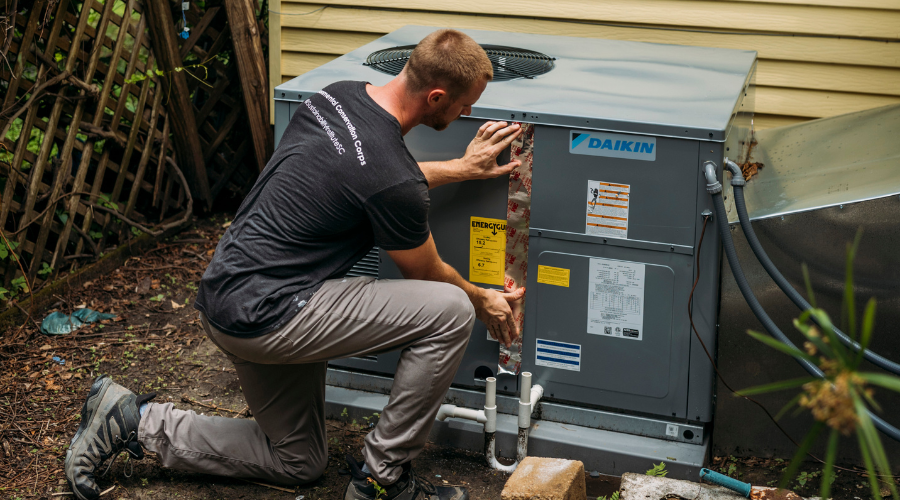
Her application for the Whole Home Performance Program through the Sustainability Institute, SEEA’s local partner in Charleston, was accepted. When the maintenance team inspected her home, they discovered that the furnace in the attic had been installed in 1959 and was no longer moving air through the house. The attic also had no insulation.
“Because of the heating unit and it being so old, they replaced the whole unit for free,” the resident said. “They also insulated my attic because it had none.” When the crew saw the age and condition of the air conditioner outside, they replaced it too.
The updates were reflected almost immediately in subsequent utility bills. “My bills were usually between $200 and $300 each month. My latest bill was $123, and the lowest has been $83,” the resident said. “I am on a fixed income, so it has been a blessing to have a lower bill and a comfortable house to live in.”
Additional results from across the Southeast suggest that the community-driven strategy is working. SEEA had expected to support around 500 applications across the eight markets. Instead, residents have filed nearly 900. SEEA estimates that households participating in utility assistance programs will save roughly $100,000 in combined annual energy costs, leaving more money in the pockets of families who need it most.
By connecting low-income residents in the Southeast with existing energy efficiency programs, SEEA and its partner organizations are helping lower energy costs and consumption, easing the impact on residents’ wallets and the power grid.
For the Charleston resident, the case for the program is simpler than that. “This program is not a joke. This is as real as it comes,” the resident said. “These programs and people are here to help. I have been a product and a blessing of it, and others can be too.”
Stay up to date with stories of impact, grants in your neighborhood and other interesting foundation news.