









From Survival to Dreams: Aisha’s In Her Hands Journey
When Aisha Amos found the postcard on her door about the In Her Hands guaranteed...
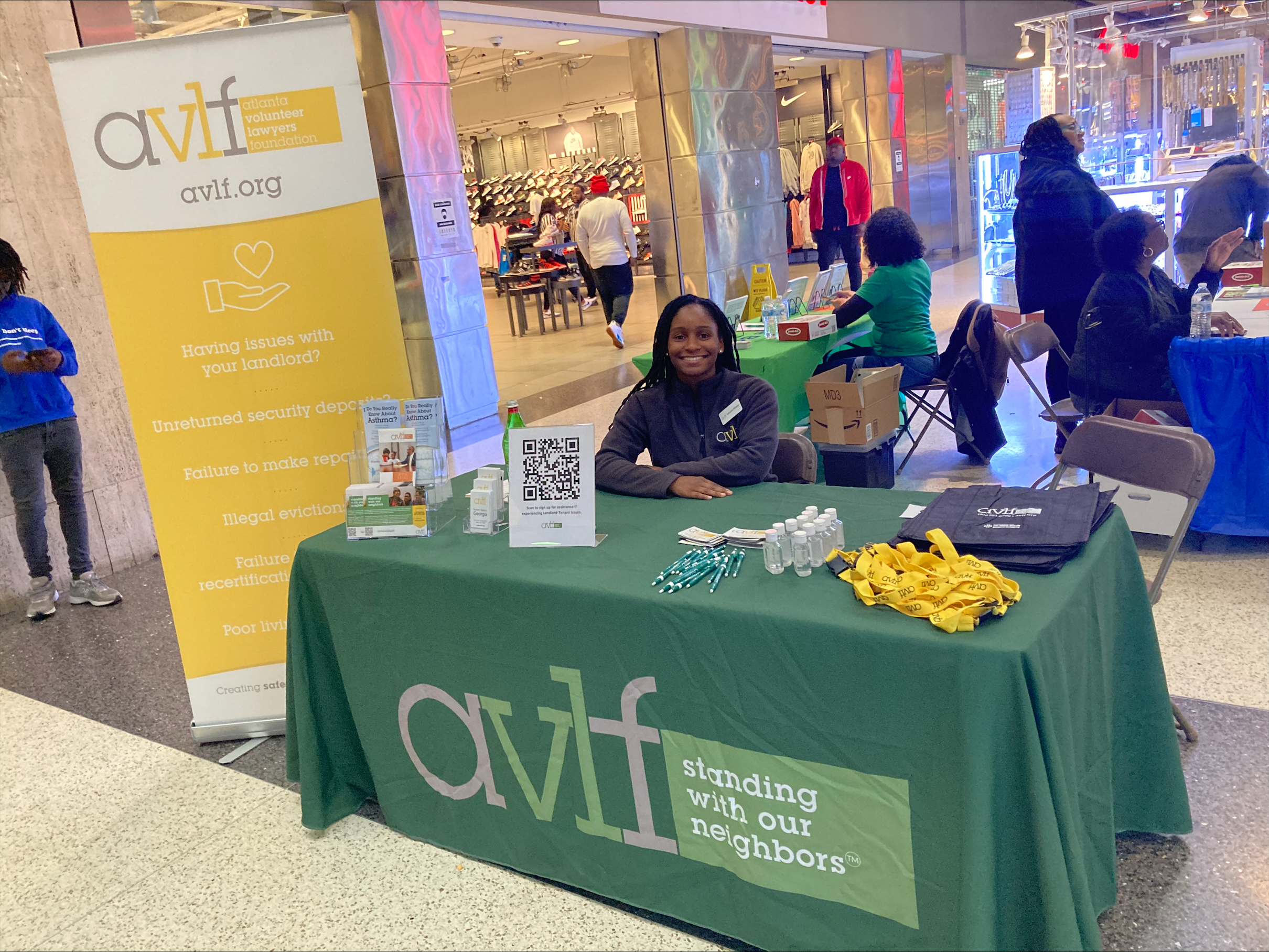
Nearly half of Atlanta residents rent their homes, and many live with unsafe conditions, instability or eviction notices. When housing becomes uncertain, children’s health suffers, education is interrupted, and families are left without options. For more than 45 years, Atlanta Volunteer Lawyers Foundation (AVLF) has been metro Atlanta’s largest pro bono legal services provider focused on domestic and partner violence, housing disputes, evictions and probate issues. AVLF works with volunteer attorneys from Atlanta’s top law firms to provide free legal representation and support to those in need. Each year, more than 5,000 Atlanta residents receive first-rate legal services from AVLF and their more than 500 legal professionals and student volunteers.
Standing with Our Westside Neighbors
To further advocate for safe and stable housing for Atlanta’s Westside families, AVLF launched the Standing with Our Neighbors (SWON) program in 2016. Through the SWON program, AVLF has preserved the housing stability and improved the rental housing conditions for Atlanta’s Westside residents while also providing funding for health and safety products and rental and utility assistance. AVLF also hosts “Know Your Rights” sessions, educating and empowering tenants on their legal rights and responsibilities under Georgia law. SWON is currently embedded in 8 schools and more than 20 neighborhoods and has resulted in reductions in enrollment turnover in every partner school.
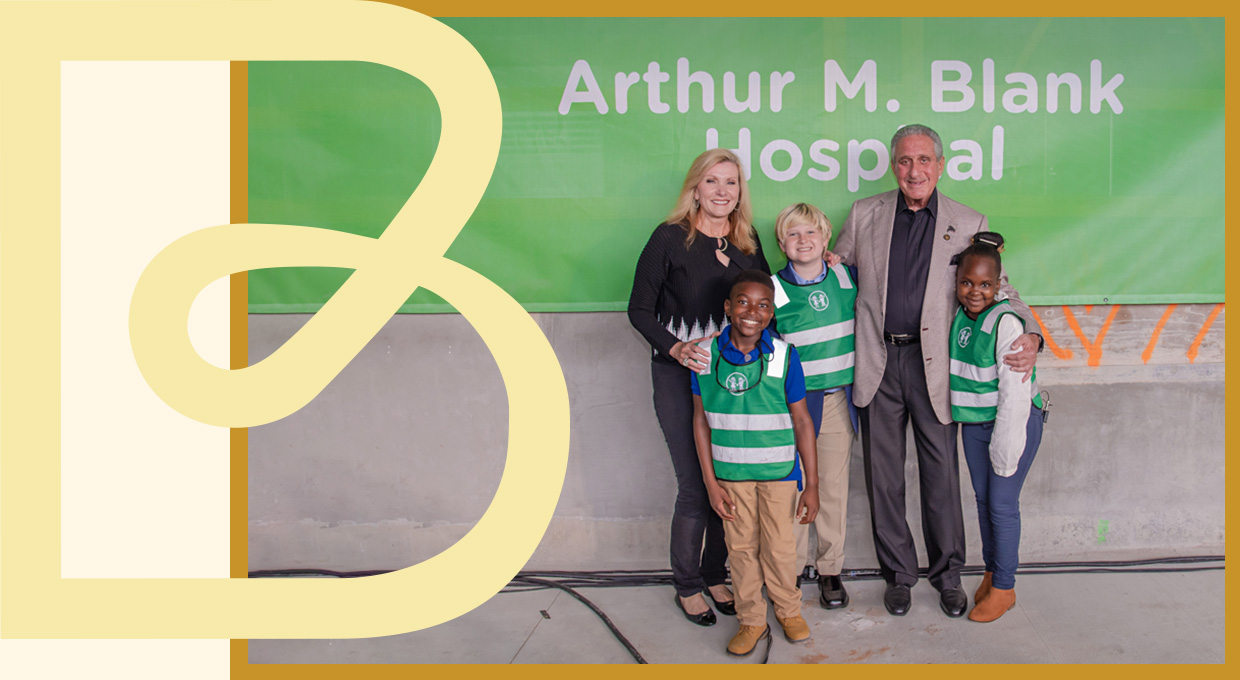
The Arthur M. Blank Family Foundation has made a $340,000 grant to AVLF to support the SWON program in preventing displacement and improving housing conditions for Westside residents. This grant aligns with the foundation’s Westside strategy through its affordable housing pathway, which partners with nonprofits (like AVLF), who work with providing legacy residents in English Avenue and Vine City to support their ability to stay and thrive in the communities they call home.
Embedded in the Community
In a recent Q&A, AVLF executive director Michael Lucas provided more background on AVLF and what it means to truly become embedded and build trust in a community.
Q: What inspired the creation of the SWON program?
A: In 2015, we took the time to thoroughly and strategically analyze our impact and our clients’ needs. We also committed to transforming AVLF into a community-based organization that worked out of the neighborhoods we served, and to being more intentional about connecting our work to critical community issues like health, education and homelessness. With those goals in mind, we looked at multiple data points, including eviction hot zones, the most common zip codes and apartment complexes for evictions, pediatric asthma rates, school enrollment turnover rates and patterns of historical disinvestment in Atlanta. We also had conversations with neighborhood leaders, community-based organizations, health and education leaders and our clients. All this led us to prioritize Neighborhood Planning Unit-V, several neighborhoods on the Westside (Vine City, English Avenue, Atlanta University Center, Castleberry Hill) and neighborhoods in and around South Atlanta and Thomasville Heights. But it all started with one elementary school: Thomasville Heights Elementary School.
Along with our partners, we worked to improve living conditions and housing stability in Thomasville Heights to reduce school enrollment turnover and enhance student attendance and performance. It was at that point in 2016 that SWON was born.
Q: The SWON program has had a measurable impact on housing stability in Atlanta’s Westside. What are some of the most meaningful outcomes you’ve seen so far?
A: The reductions we’ve seen in school enrollment turnover rates have been among the most meaningful outcomes. But it’s the individual cases, and the heart and drive of our volunteer attorneys, that truly drive our most meaningful outcomes. In one example, we assisted a family whose home was infested with mold and other poor conditions and were able to secure a five-figure settlement in a lawsuit against their corporate landlord, an outcome that significantly changed our clients’ circumstances. In another example, working on a case that would normally be resolved with a quick demand letter, two volunteer attorneys spent more than a year in lengthy negotiations with a landlord’s counsel to get a client her security deposit. These are the outcomes that build trust with families and send the message to landlords that their business model can’t include taking advantage of the residents of communities where AVLF is embedded.
Q: How does AVLF approach preventing displacement and improving housing conditions for legacy residents in neighborhoods like English Avenue and Vine City?
A: Much of how we approach displacement and improving conditions draws from the original premises of the SWON program. One of those guiding principles was having greater impact through being proximate to the work. What differentiates us among legal services is our belief that the more proximate we can be to the work, the more real impact we’ll have. Being in the community allows us to really get to know the issues, it allows us to build trust in the community, it positions us as repeat players among any bad actors, it helps us stay abreast of changes on the ground and it helps us gain allies in the work. To that end, AVLF recently moved its headquarters to the Westside to deepen our roots in the neighborhood. Our SWON team can now conduct meetings at the office with residents and more easily meet clients at their homes or nearby community centers.
Q: How has embedding attorneys and social workers directly in the community helped build trust with residents?
A: A major guiding principle behind SWON was equitable access, which is all about reaching our neighbors who are isolated by poverty, isolated by the demands of working two jobs, isolated by their abuser or reluctant for many valid reasons to coming to the courthouse or to a downtown law office. Equitable access for us is also about being very intentional in our outreach efforts and about what communities we choose to be in, where we put our offices, who we hire to represent us and how seriously we take becoming part of the community long-term. Having our attorneys and advocates embedded in our schools and communities changes the game.
Q: What role does legal education, like your “Know Your Rights” sessions, play in empowering tenants and preventing housing injustice?
A: Legal education is crucial to preventing housing injustice. Our “Know Your Rights” sessions aren’t just about informing the tenants about evictions. We give them the necessary tools to advocate for themselves. We review the baseline of what they should expect from their landlords and from the court system. We equip them with the basic guidelines of how to handle a conditions issue and how to respond to an eviction. It’s incredibly important that our tenants have an awareness of what their rights are, so they’re not taken advantage of.
Q: What changes would you like to see in Georgia’s tenant protection laws?
A: Stronger protections for clients who are victim to baseless evictions and/or who win their eviction hearing would make a significant difference. As it stands, if a landlord files an eviction against a tenant (even if the claim has no merit), the eviction remains on the tenant’s public record for at least seven years and can prevent the tenant from finding future housing.
In addition, specific minimum damages for landlord violations of the Safe at Home Act, particularly the habitability requirement, would benefit our clients. Many of our clients live in conditions that are not the greatest, and instead of making repairs, landlords offer lease terminations without penalty and move in another unsuspecting tenant to face the same problems. Forcing the landlord to make the repairs or making them pay damages could help end this cycle.
Q: What are your hopes for the future of the SWON program and AVLF’s work in the Westside?
A: We hope to expand our program not only to more schools on the Westside, but further into the community itself. SWON is based in the schools, but we’re expanding our reach deeper into neighborhoods to increase our impact. In addition, we are committed to finding partners willing to invest in the long-term sustainability of our model in the Washington Cluster neighborhood and the Westside more generally. These are very uncertain times and Westside residents need someone standing with them more than ever.
AVLF’s community and school-based services demonstrate an unwavering commitment to serving residents and ensuring that they are treated in an equitable manner. Through SWON, AVLF continues to be a leader in protecting renters, particularly those who are often most susceptible to housing injustice and insecurity in Georgia. The foundation is proud to partner with AVLF to prevent displacement on the Westside by reducing illegal evictions and increasing renter and homeowner protections. To learn more about AVLF, please visit avlf.org.


Stay up to date with stories of impact, grants in your neighborhood and other interesting foundation news.